From 90 interviews to two programs: designing Bohoka
Design research and co-design work behind Tegura Ejo Heza, a mental health literacy and peer support program for young people in Rwanda, built from the ground up with the people it was for.
The context
Mental health literacy among young people in Rwanda was low, and the reasons weren’t simple. Roughly 13% of Rwandans aged 12 to 17 had reported suicidal ideation or behavior in the prior six months, and around one in four young people met the diagnostic criteria for depression. Seeking help carried real social cost. A generation shaped by the aftermath of the genocide often saw its own trauma as the only trauma worth taking seriously, which left little room for a teenager’s anxiety or a break-up to register as something real. The program’s job wasn’t to build an app. It was to find a way into a problem that most young people had been taught not to talk about at all.
What the research found
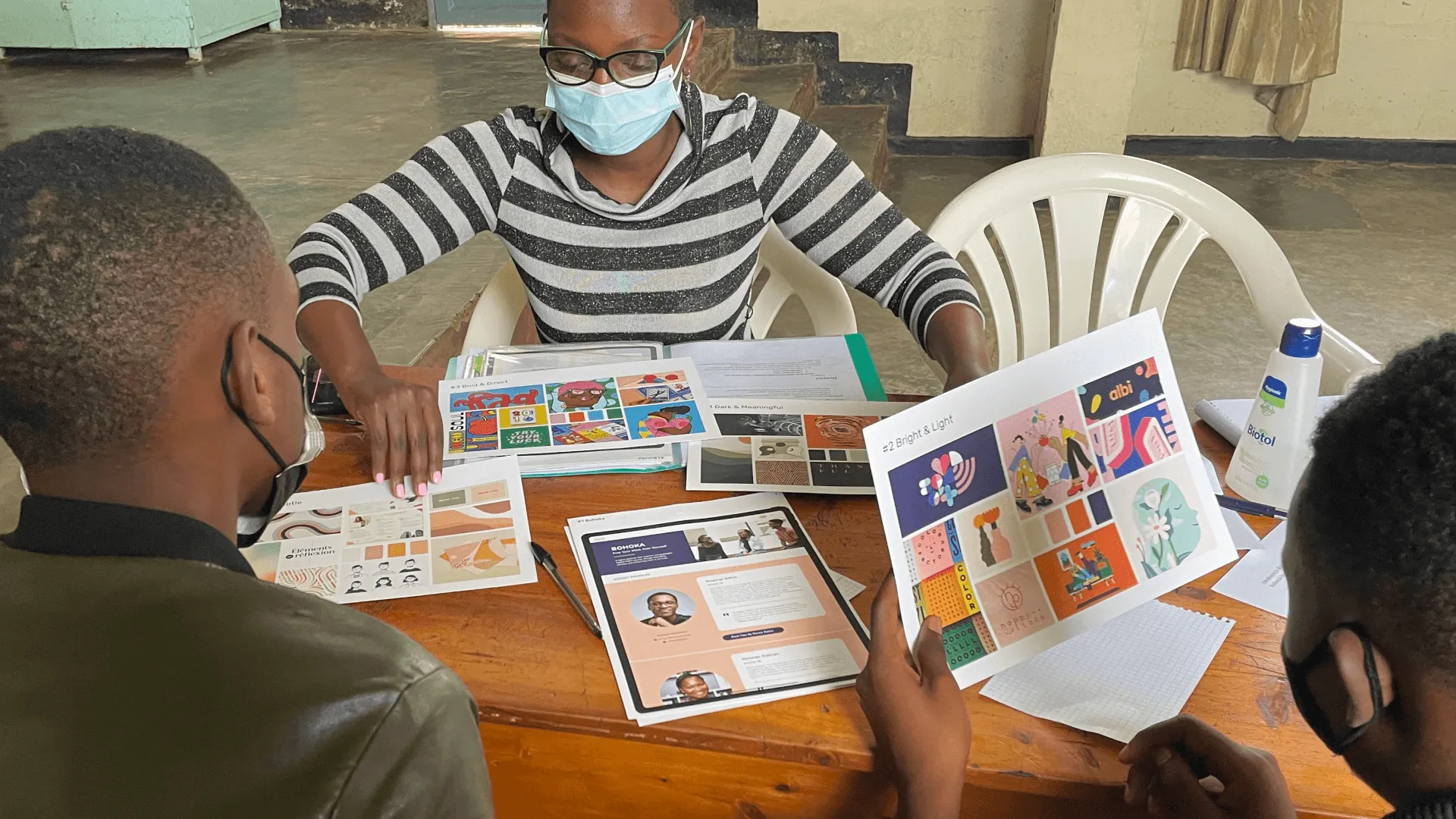
In September 2021, I took part in design research across two youth centers in Kigali, speaking with 45 people: 37 young people aged 10 to 19, and 8 parents, teachers and healthcare providers. Young people mostly defined mental health by its most extreme, visible symptoms, shouting, self-harm, addiction, so quieter struggles like anxiety or low mood didn’t register as worth mentioning. Confidentiality mattered more than the channel it came through. And who a young person would turn to depended on how stigmatized they judged their problem to be: sadness went to a parent or friend, but shame around HIV status or self-harm was more likely to go to a stranger, who couldn’t judge them by it later.
We built three personas from this research to keep the work grounded in specific people rather than an abstract “youth” user.
Co-designing, then testing six ideas to find two
I helped facilitate two co-design workshops with 12 participants aged 15 to 19 across the two youth centers, working from those personas. The brief was open on purpose: how could they help other young people identify, learn about and talk about mental health. The sessions produced five original concepts, from a YouTube page where trained young people interviewed experts, to a peer program pairing trained “Wellness Warriors” with youth needing support, to a comic book following a young person’s mental health journey.
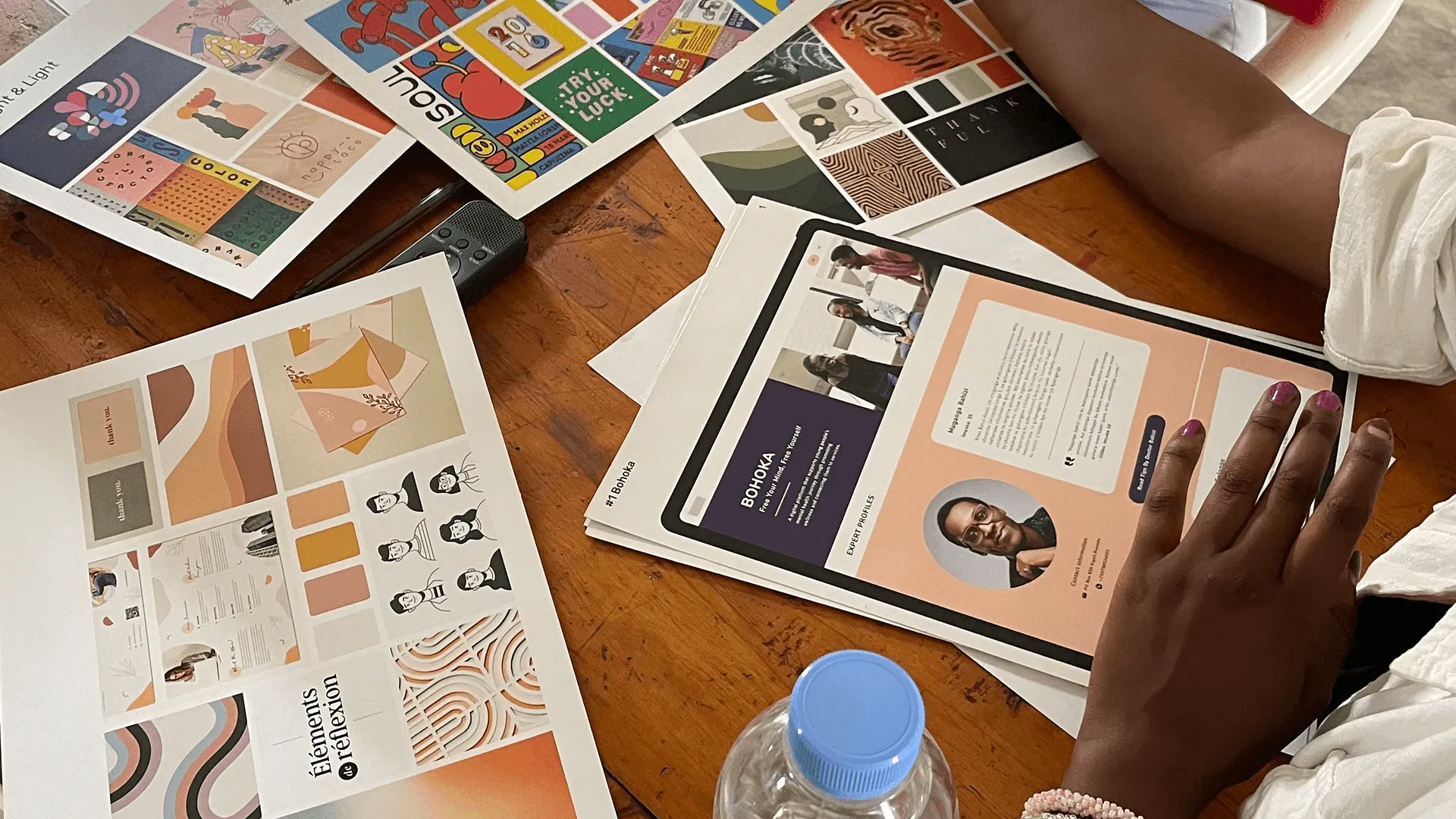
Those concepts, plus a version of the original Bohoka platform idea, went into rough prototyping with 45 community members in 2021. Each was tested for real, and the results were often not what the team expected.
“Ask Mahoro” tested well specifically because of the anonymity. One participant put it plainly: they’d rather ask someone who didn’t know them than someone who did, since a stranger had no reason to soften the truth or judge them for it later. The comic book landed with some participants and lost others, who felt drawn illustrations read as made up rather than trustworthy, even though the same group said the format was the easiest thing to get through. The public forum tested worst of all: almost nobody wanted their name attached to their story, so an idea built around visibility had to be rebuilt around anonymity to survive.
The team mapped all six concepts against three barriers the research had surfaced, low mental health literacy, not knowing where to seek care, and the cost and inconvenience of access, and narrowed to three for live testing: Bohoka itself, Mfasha, built around the anonymous-expert insight from “Ask Mahoro,” and Turi Kumwe, the trained peer support system.
What it became
Bohoka and Turi Kumwe are the two components of Tegura Ejo Heza as it exists today, an online learning platform and offline peer support program run by trained Wellness Warriors. Bohoka’s chatbot, a free, anonymous conversation with a mental health expert, grew directly out of “Ask Mahoro,” which tested well in November 2021, and I designed part of its interface myself.
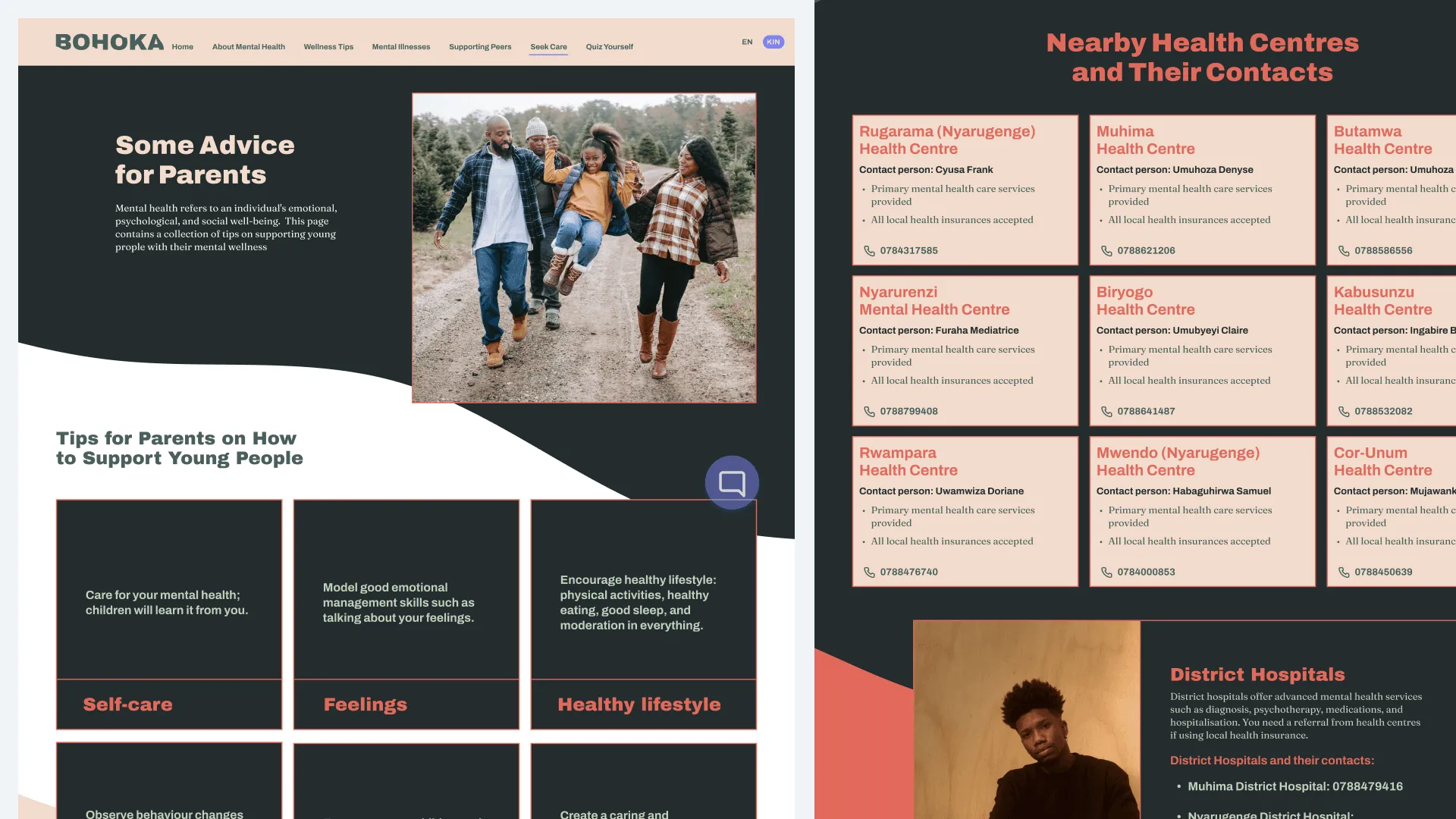
The Bohoka platform. Its anonymous expert chatbot grew directly out of “Ask Mahoro”.
This project was funded by the National Institute for Health Research (NIHR) using UK aid from the UK Government to support global health research. The views expressed in this publication are those of the author(s) and not necessarily those of the NIHR or the UK government.
NextKauli & Matrix: two diagnostic products, one framework